.png?width=319&height=45&name=svgexport-1%20(2).png)
 Contact our Team:
  15 Aug 2026, 13:00:02
Chef Rui Silvestre leads the kitchen at Fifty Seconds, the two-Michelin-star restaurant perched 120 metres above Lisbon at the top of the Vasco da Gama Tower. Born in Valongo and raised in the Algarve from the age of ten, Silvestre became one of the youngest Portuguese chefs to win a Michelin star and went on to lead the kitchen at Vistas by Rui Silvestre, in the Algarve, before taking the helm at Fifty Seconds in 2024.
In March 2026, the restaurant earned its second Michelin star, confirming Silvestre's place among Portugal's most accomplished chefs. In this exclusive interview, he talks about his Algarve roots, the lessons he took from working alongside French chef Christophe Bacquié, the Atlantic identity behind his cooking, and what it means to cook fifty seconds and 120 metres, above the streets of Lisbon.
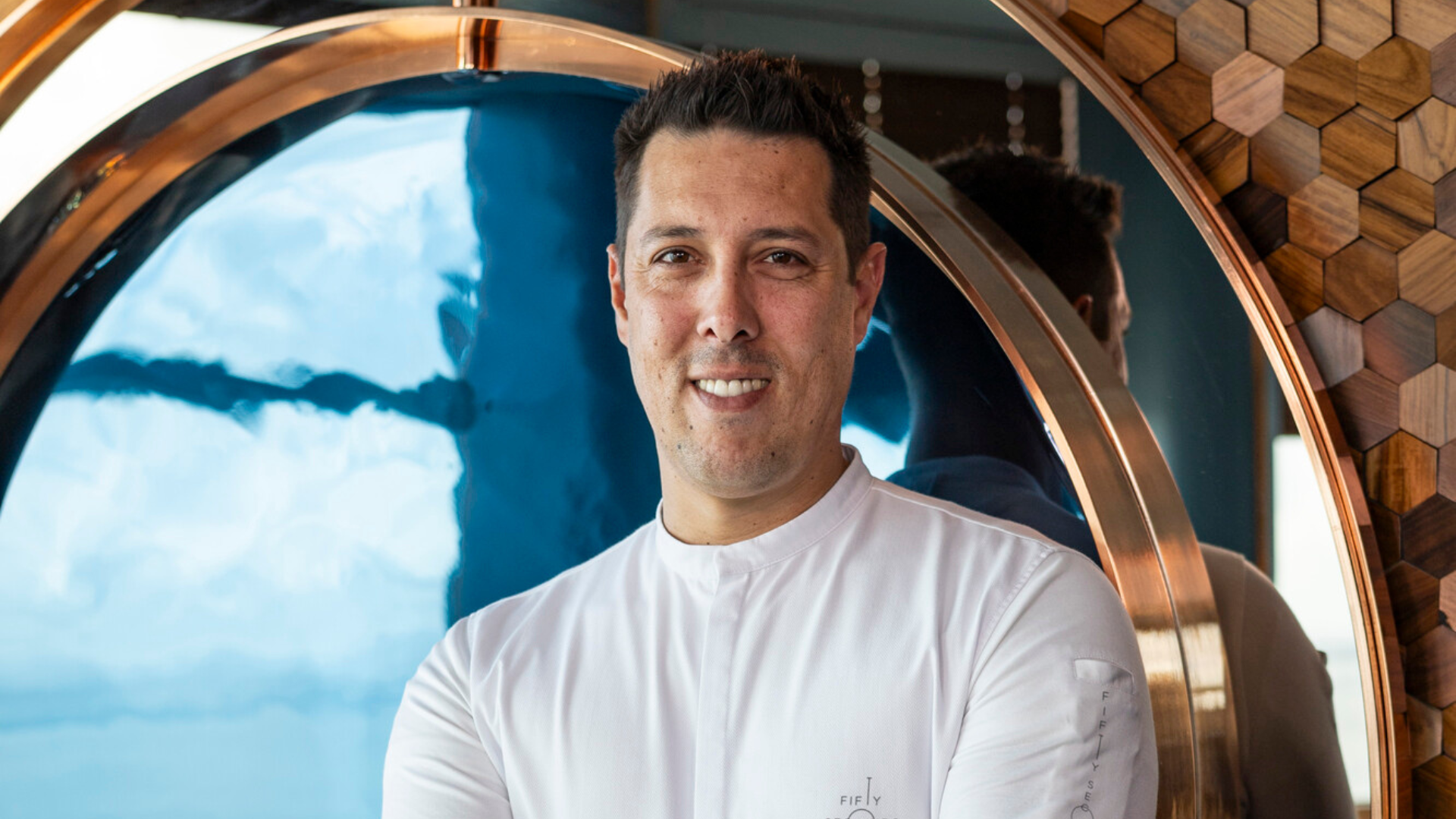 Photo from Fifty Seconds Restaurant Website
1. Who is Chef Rui Silvestre today, beyond the Michelin stars?
Today I see myself as someone focused on building a kitchen with a clear, consistent identity over time. The stars matter; they validate the work, but they don't define who I am. What defines me is the daily process: the demand for rigour, the repetition, the constant evolution.
I'm increasingly interested in creating a language of my own, one that starts in Portugal, in this Atlantic territory, but that speaks to the rest of the world. A cuisine that isn't closed off or nostalgic, but aware of its own history.
2. What three words best define you at this point in your life?
Demanding, because I don't compromise on detail. Focused, because I know exactly where I want to go. Restless, because I'm never fully satisfied.
3. You grew up in the Algarve. How does that upbringing still show in your cooking today?
The Algarve gave me two fundamental things: the product, and the way to respect it. I grew up close to the sea, close to simple flavours, without excessive intervention.
But I also grew up in a family, and in a region, that has historically been open, a point of contact between cultures. Today that shows in my cooking: there's a very clear Portuguese base, but with references that come from that Atlantic connection and from a history that is so rich.
4. You were the youngest Portuguese chef to win a Michelin star. How did that moment shape you, personally and professionally?
It was a defining moment, but it brought responsibility early on. It forces you to grow quickly, to understand that recognition isn't a finish line; it's a starting point.
It also made me aware of something important: fine dining isn't a sprint; it's a marathon. And that has shaped the way I look at the work today, less focused on the moment and more on consistency over time.
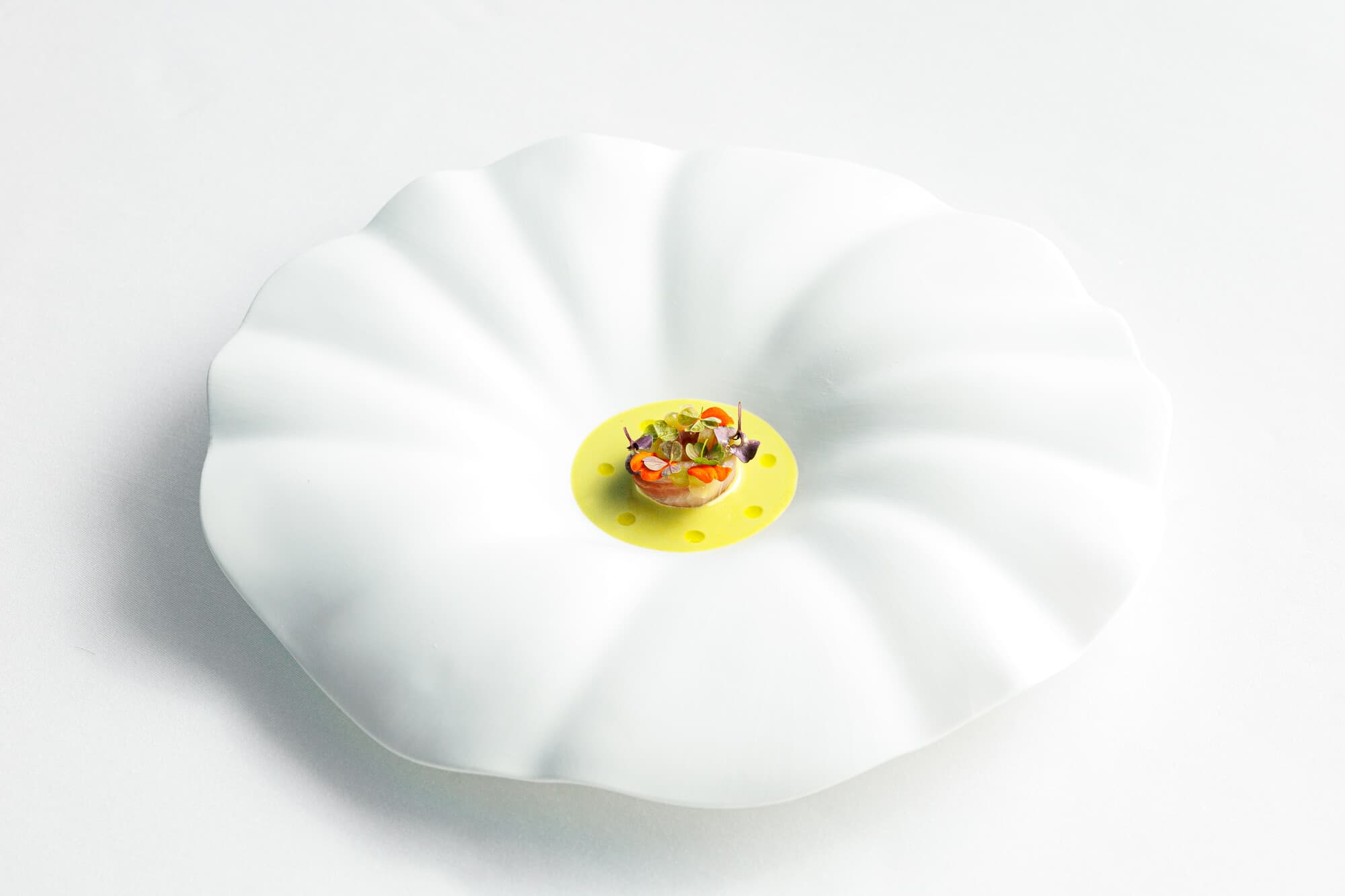
Photo from Fifty Seconds Restaurant Website
5. You worked in demanding kitchens, including alongside Christophe Bacquié. What did those experiences teach you that you still apply every day?
They taught me rigour and discipline, but above all a way of thinking: the idea that there are no shortcuts; either it's right, or it isn't.
They also gave me perspective. Leaving Portugal made me understand the value of what we have here, and the possibility of building a cuisine that doesn't copy foreign models, but that speaks with them.
6. Was there ever a moment when you felt you had to "unlearn" to find your own identity?
I wouldn't call it unlearning, more filtering, and it's an inevitable process. At the start you absorb a lot: techniques, styles, references. But there comes a point where that can turn into noise.
I had to move away from the need to impress technically and get closer to a more honest cuisine, one aligned with what makes sense to me: product, territory, and an Atlantic narrative with global influence.
7. How would you describe your cooking to someone who has never tasted a dish of yours?
I'd say it's contemporary Atlantic cuisine. It starts from Portuguese produce, especially from the sea, but it incorporates influences that come from the history of our contact with other cultures.
It's technical cooking, but one that looks for clarity. I'm not interested in complicating things, I'm interested in creating emotion.
8. You're known for favouring national flavours, especially fish and seafood. How do you reinvent these products without losing their essence?
I don't try to reinvent in the sense of completely transforming the product. I try to interpret it.
I often work with references from other geographies connected to Portugal, Africa, Asia, South America, but the goal is always to bring out the product, not to mask it. If the product disappears, the dish loses its meaning.
9. What comes first in one of your dishes: technique, product, or emotion?
The product always comes first. Without the product, there's no foundation.
Then comes the idea, which can come from a memory, a trip, or a cultural reference. Technique comes in to serve that idea. Emotion happens when everything is aligned.
10. Which dish has challenged you the most to create?
Usually it's the simplest dishes. When you have few elements, there's no room to hide mistakes.
Working a product at its simplest forces a very high level of precision. That's where the real challenge lies.
11. Is there a dish of yours that tells a personal story?
Yes, several. Many of my dishes come from that connection to the Portuguese diaspora, ingredients, techniques or combinations that reflect that history.
But I prefer that reading not to be imposed. I like guests to discover those connections more intuitively.
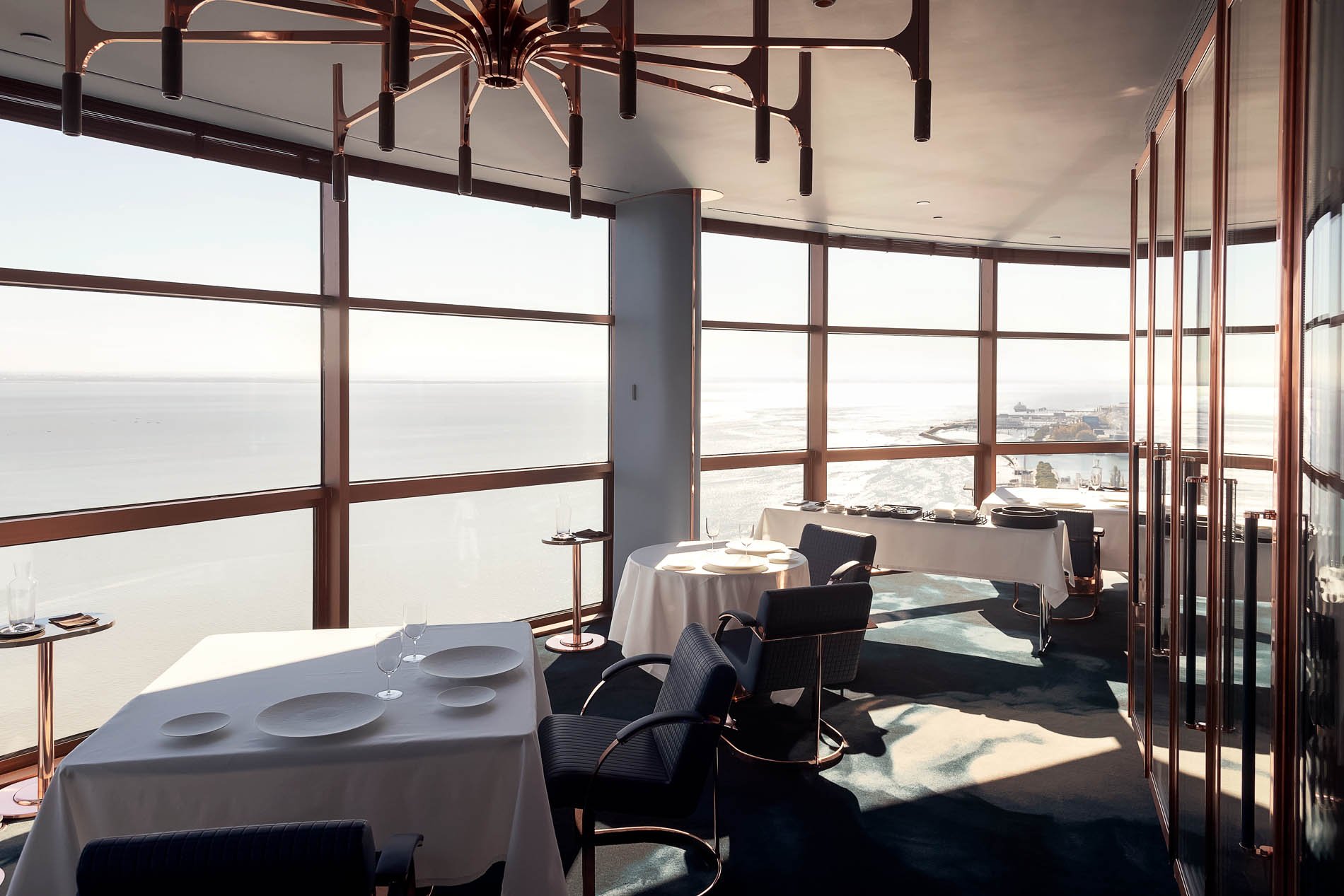
Fifty Seconds Restaurant
12. Your dishes are often described as "gastronomic journeys." What do you want guests to feel when they taste them?
The word "journey" can be used superficially, and I try to avoid that. What I look for is connection.
If a guest feels surprise, curiosity, or even a memory, that's already enough. It doesn't have to be a literal experience, but it has to leave a mark.
13. You won your second Michelin star at Fifty Seconds. What is it like cooking in such a unique space?
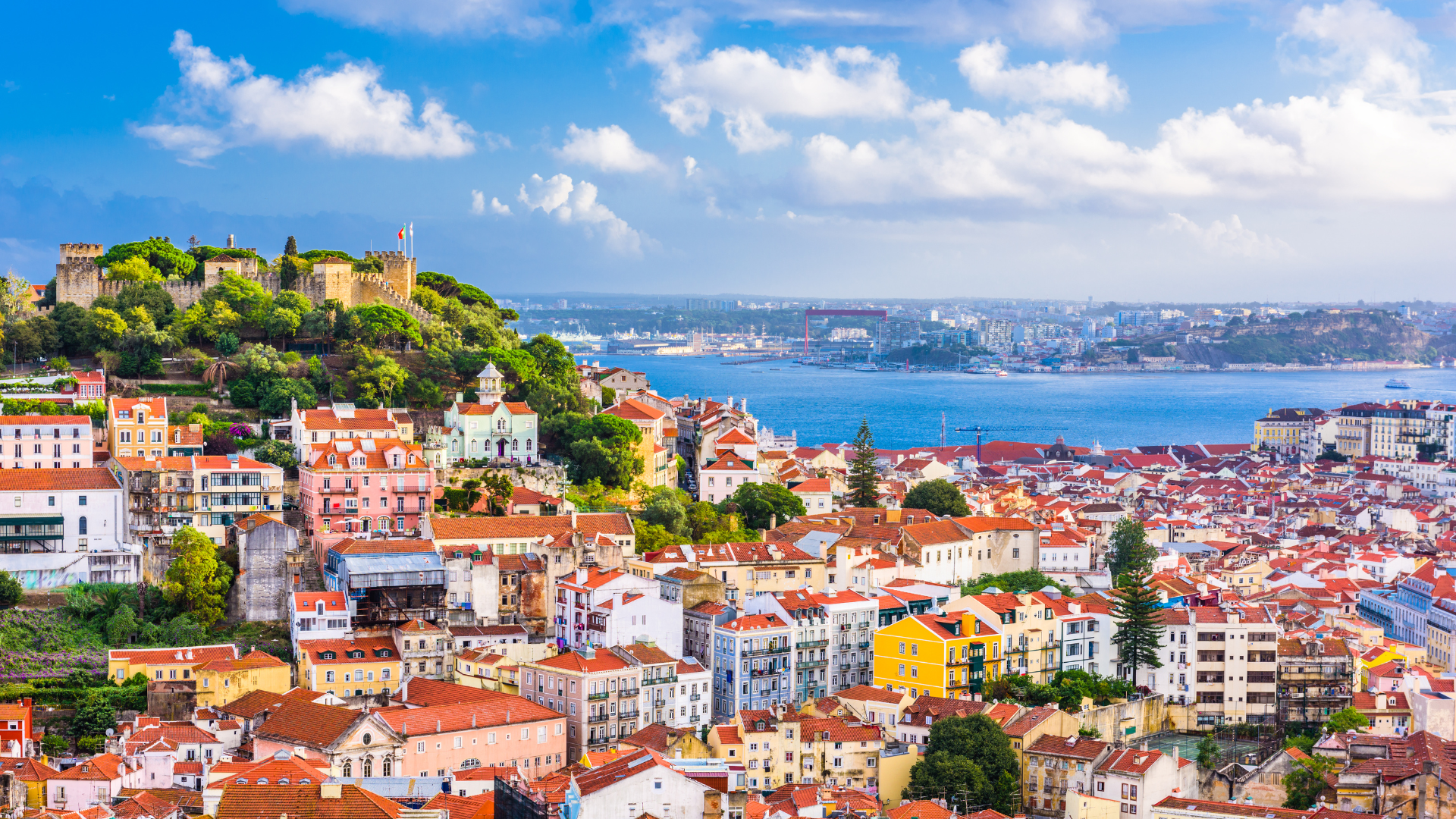
It's a space with a very strong identity. The view puts Lisbon at the centre, an Atlantic city, historically open to the world.
That creates expectation, and the challenge is to make sure the food matches, or goes beyond, that experience. The dish can never be secondary.
14. Is there anything about this project that's completely different from anything you've done before?
The scale of exposure and responsibility. Everything is amplified: the expectation, the consistency, the attention to detail.
It's also a project where the narrative of the kitchen has to be very clearly defined.
15. In what way does Fifty Seconds reflect your maturity as a chef?
Today I'm clearer in my decisions. There's less excess, less need to prove something.
The focus is on consistency and on building an identity that's recognisable and sustainable over time.
16. What do you enjoy cooking at home?
Simple food. Often the same products: fish, shellfish, vegetables.
After a demanding day, the luxury is to simplify.
17. What role does wine pairing play in the ideal dining experience?
It's fundamental. It shouldn't be a complement, it should be part of building the experience.
In a style of cooking with several cultural references, pairing helps create coherence and connect the different elements.
.png?width=6244&height=4163&name=DSC09154WTP%20(4).png)
Fifty Seconds Sommelier Marc Pinto | Wine tourism in Portugal
18. Is there a wine or wine region that particularly excites you right now?
Portugal keeps surprising me. There are producers working with enormous quality and identity.
But I'm also interested in exploring regions that historically had a connection to us, that creates interesting bridges with the food.
19. Sustainability is increasingly central to gastronomy. How do you bring it into your daily work?
In a practical way: conscious choice of product, respect for seasonality, and reducing waste.
Sustainability can't just be a discourse, it has to be a consequence of daily decisions.
20. Do you believe fine dining has a responsibility to educate the consumer?
I don't believe it should be done in an imposing way. The experience should spark curiosity.
If we manage to show the depth of our cuisine, our history and our products, we're already contributing.
21. What changes would you like to see in Portuguese restaurants over the next few years?
I'd like to see Portuguese cuisine become more assertive, less dependent on outside validation.
We have enough product, history and identity to occupy a much more relevant place. Sometimes what's missing is the confidence to claim it.